


Introduction
Credentialing is a meticulous process, and overlooking potential red flags can result in payer disputes, delayed approvals, or compliance penalties. For DME providers, identifying and addressing these issues early ensures a seamless process and protects both revenue and patient care.
In this blog, we’ll outline common credentialing red flags, their potential consequences, and proactive strategies to resolve them before they escalate.
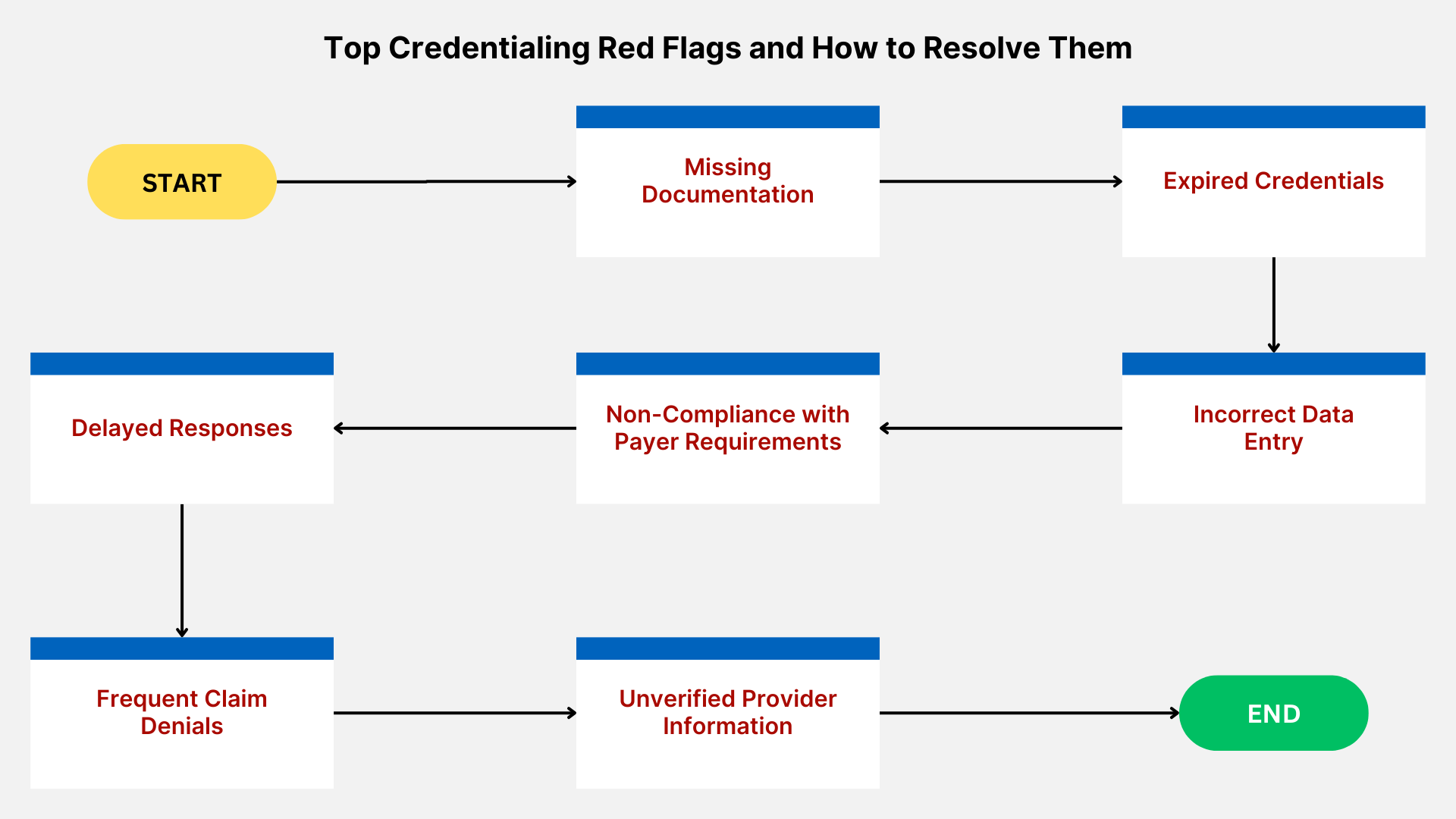
Common Credentialing Red Flags and Their Risks
- Missing or Expired Documentation
- Risk: Incomplete or outdated provider licenses, certifications, or insurance policies lead to application denials or delisting from payer networks.
- Solution:
Regularly update and audit provider files, using automated reminders for upcoming expirations.
- Inconsistent Information Across Applications
- Risk: Discrepancies in provider details (e.g., mismatched addresses or NPI numbers) delay approvals or trigger payer audits.
- Solution:
Standardize provider data and use credentialing software to maintain consistency across all applications.
- Non-Compliance with Payer Requirements
- Risk: Failure to meet specific payer guidelines results in rejections and longer credentialing timelines.
- Solution:
Create payer-specific workflows and cross-check applications against their requirements.
- High Application Denial Rates
- Risk: Frequent denials signal underlying issues with documentation accuracy or team training.
- Solution:
Review denial trends and implement targeted training to address recurring errors.
- Delayed Submissions
- Risk: Missing credentialing deadlines disrupt provider enrollment, leading to revenue loss and patient access issues.
- Solution:
Track deadlines with credentialing software and assign clear responsibilities within your team.
- Lack of Follow-Up on Pending Applications
- Risk: Unmonitored applications stall indefinitely, delaying approvals and reimbursements.
- Solution:
Implement a tracking system with reminders for regular payer follow-ups.
- Provider Gaps in Network Participation
- Risk: Temporary lapses in credentialing status result in claims denials and patient dissatisfaction.
- Solution:
Proactively renew credentials before expiration and confirm network status regularly.
How to Identify Credentialing Red Flags Early
- Conduct Regular Audits
- Why It Works:
Audits highlight gaps in documentation, processes, and compliance, preventing future issues. - How to Do It:
Use a checklist to review provider files, application statuses, and payer-specific requirements.
- Why It Works:
- Monitor Credentialing Metrics
- Why It Works:
Key metrics like denial rates and approval timelines provide insights into potential problems. - How to Do It:
Set up dashboards to track and analyze credentialing performance in real time.
- Why It Works:
- Leverage Technology
- Why It Works:
Automation minimizes human errors and ensures timely updates and submissions. - How to Do It:
Use credentialing software to manage deadlines, track applications, and maintain accurate provider data.
- Why It Works:
- Train Your Team
- Why It Works:
Educated staff are better equipped to spot and address issues during application preparation. - How to Do It:
Schedule regular training sessions on payer requirements, compliance standards, and documentation accuracy.
- Why It Works:
- Communicate Proactively with Payers
- Why It Works:
Clear communication helps resolve issues quickly and prevents delays. - How to Do It:
Assign dedicated team members to handle payer follow-ups and maintain relationships.
- Why It Works:
Analyze recurring issues across applications to identify root causes, such as outdated templates or unclear workflows, and implement corrective actions.
How WWS Can Help
At WWS, we help DME providers eliminate credentialing red flags with:
- Proactive Audits: Identify and address issues before they impact your credentialing process.
- Automation Tools: Streamline documentation tracking, deadline reminders, and application consistency.
- Team Training: Provide customized training on credentialing best practices and compliance requirements.
Schedule a consultation with WWS today to safeguard your credentialing process against red flags:
Schedule a Meeting with WWS.
Conclusion
Spotting and addressing credentialing red flags early is critical to maintaining compliance, avoiding delays, and protecting revenue. By leveraging technology, monitoring key metrics, and fostering a proactive approach, your practice can navigate potential issues effectively and ensure a seamless credentialing process.
Partner with WWS to optimize your credentialing and eliminate red flags—schedule your consultation today!