

Introduction
As the healthcare industry continues to evolve, so do the processes and technologies surrounding credentialing. Emerging trends and innovations are transforming how DME providers manage compliance, streamline workflows, and improve payer relationships. Staying ahead of these changes is essential for maintaining efficiency, reducing costs, and meeting growing regulatory demands.
In this blog, we’ll explore the future of credentialing, highlighting key trends and technological innovations shaping the industry and how DME providers can prepare for what’s ahead.
Key Trends Shaping the Future of Credentialing
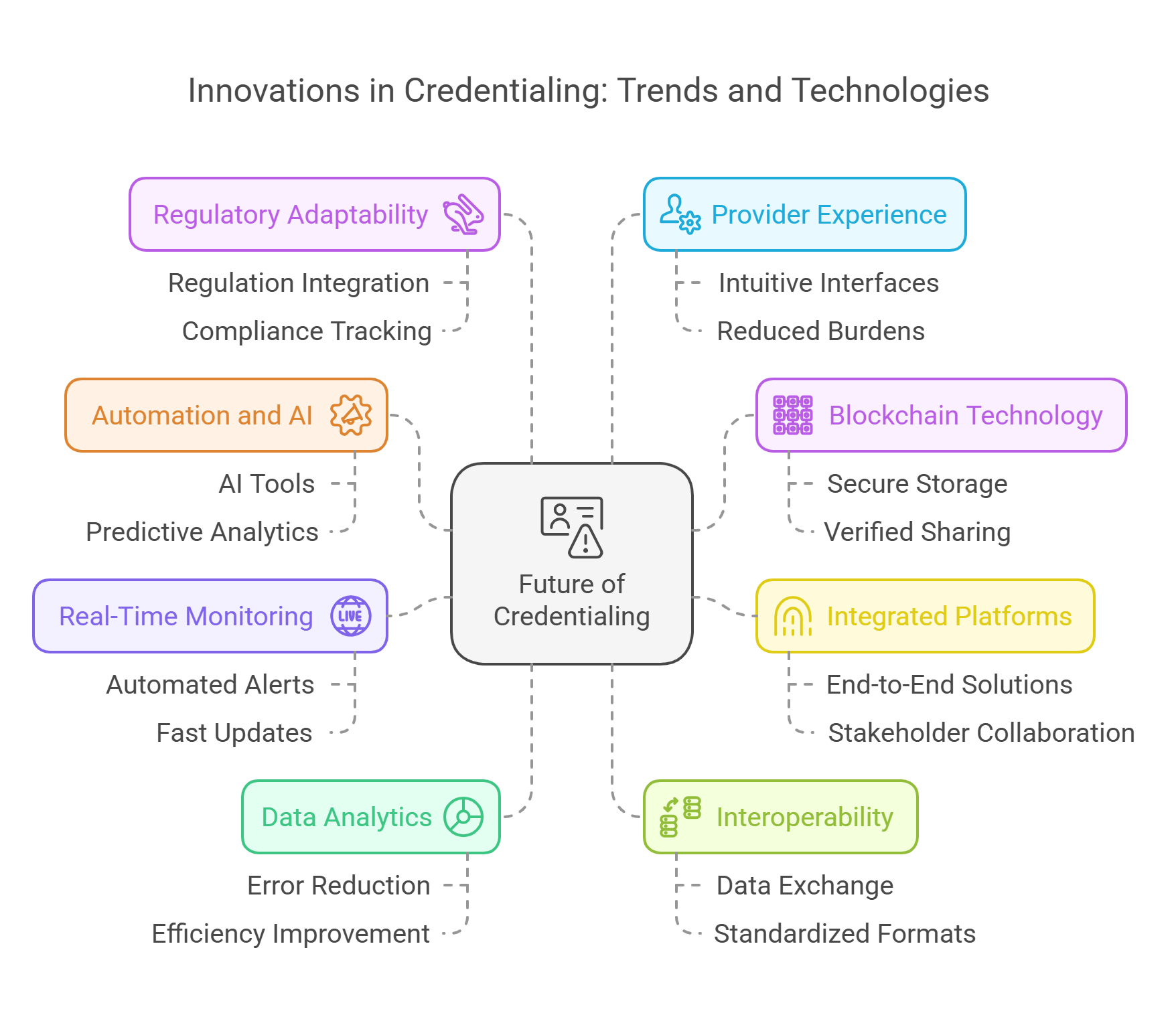
- Increased Use of Automation and AI
- What to Expect:
Credentialing systems will leverage artificial intelligence (AI) and automation to reduce manual tasks, flag errors, and accelerate processing times. - Impact on DME Providers:
Fewer administrative delays, improved accuracy, and faster approvals.
- What to Expect:
- Integration with Advanced Analytics
- What to Expect:
Credentialing platforms will offer predictive analytics to forecast trends, identify bottlenecks, and optimize workflows. - Impact on DME Providers:
Data-driven insights for improving credentialing efficiency and compliance.
- What to Expect:
- Shift Toward Interoperability
- What to Expect:
Credentialing systems will integrate more seamlessly with electronic health records (EHRs), billing platforms, and other healthcare systems. - Impact on DME Providers:
Enhanced data sharing, reduced redundancies, and smoother operations across departments.
- What to Expect:
- Emphasis on Provider Mobility
- What to Expect:
Credentialing processes will adapt to support providers working across multiple states or regions, particularly in telehealth and remote care. - Impact on DME Providers:
Streamlined multi-state compliance and faster onboarding for new hires.
- What to Expect:
- Regulatory Adaptations for Value-Based Care
- What to Expect:
Credentialing will increasingly focus on quality metrics, patient outcomes, and cost efficiency to align with value-based care models. - Impact on DME Providers:
Greater emphasis on tracking and reporting performance metrics during credentialing.
- What to Expect:
Technological Innovations in Credentialing
- Blockchain Technology
- How It Works:
Creates a secure, decentralized ledger for storing provider credentials and tracking updates. - Benefits:
Reduces duplication, enhances data security, and simplifies information sharing across organizations.
- How It Works:
- Cloud-Based Credentialing Systems
- How It Works:
Allows providers to access credentialing data from anywhere with internet connectivity. - Benefits:
Greater flexibility, centralized management, and streamlined collaboration.
- How It Works:
- Biometric Verification
- How It Works:
Uses fingerprint or facial recognition to verify provider identities and ensure credential authenticity. - Benefits:
Enhanced security and reduced risk of fraud.
- How It Works:
- Real-Time Compliance Monitoring
- How It Works:
Automatically tracks regulatory updates and flags areas of non-compliance in real time. - Benefits:
Immediate action on compliance issues, minimizing risks and penalties.
- How It Works:
Preparing Your Practice for the Future of Credentialing
- Embrace Technology Early
- Why It Matters:
Early adoption positions your practice to stay competitive as new systems and tools become standard. - How to Do It:
Invest in credentialing platforms with automation, analytics, and integration capabilities.
- Why It Matters:
- Stay Informed on Industry Trends
- Why It Matters:
Understanding emerging trends helps you adapt proactively to changes in credentialing requirements. - How to Do It:
Subscribe to industry updates, attend conferences, and network with peers to stay ahead.
- Why It Matters:
- Focus on Data Security
- Why It Matters:
Protecting sensitive provider and patient information is critical as credentialing becomes more digitized. - How to Do It:
Implement robust cybersecurity measures and ensure compliance with data privacy regulations like HIPAA.
- Why It Matters:
- Train Your Team on New Tools
- Why It Matters:
Maximizing the benefits of advanced credentialing tools requires a well-trained staff. - How to Do It:
Schedule ongoing training sessions and provide access to user-friendly resources.
- Why It Matters:
- Partner with Credentialing Experts
- Why It Matters:
Industry experts can guide you in adopting best practices and navigating emerging challenges. - How to Do It:
Collaborate with a credentialing service provider to stay ahead of innovations and maintain compliance.
- Why It Matters:
Choose credentialing systems and tools that can grow with your practice, accommodating future expansions and new regulatory demands.
How WWS Can Help
At WWS, we prepare DME providers for the future of credentialing with:
- Cutting-Edge Technology: Access the latest tools and platforms to automate, track, and optimize your credentialing processes.
- Expert Guidance: Stay ahead of trends with insights and strategies tailored to your practice’s needs.
- Compliance Support: Navigate evolving regulations with confidence, ensuring seamless operations.
Schedule a consultation with WWS today to future-proof your credentialing processes:
Schedule a Meeting with WWS.
Conclusion
The future of credentialing is driven by technology, data integration, and evolving regulatory demands. By embracing these innovations and adapting proactively, DME providers can streamline workflows, enhance compliance, and maintain a competitive edge.
Partner with WWS to navigate the future of credentialing and optimize your practice—schedule your consultation today!