
The Scenario: The Passive Wait
The Provider Enrollment team at the client organization was diligent. Every week, they logged into various payer portals (Availity, Optum, etc.) to check the status of pending applications. They sent messages through the portal’s internal ticketing systems. They felt productive because they were following the “official” channels.
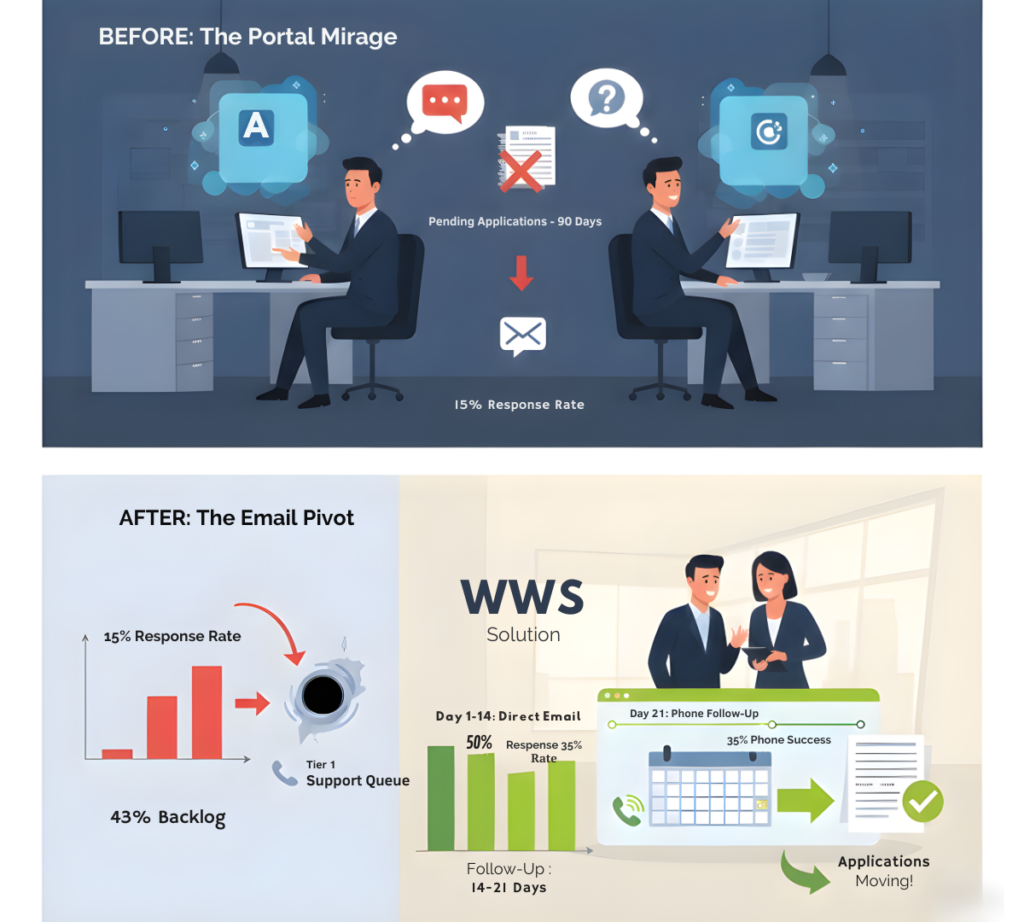
However, the results were stagnant. The audit revealed a massive backlog: 43% of all applications were sitting in “Pending” status. Even worse, the average age of these pending applications had ballooned to 90 days.
The Operational Failure
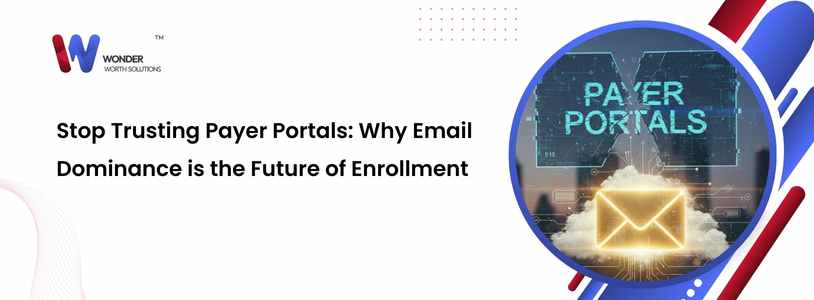
The team was shouting into a digital void. While payer portals are excellent for submitting data, they are terrible for negotiating it.
Our data analysis exposed the “Portal Mirage”:
- Low Engagement: Messages sent through payer portals yielded a dismal 15% response rate.
- The Black Hole: Portal inquiries often go to a general support queue, staffed by Tier 1 representatives who lack the authority to move a contract forward. The team was wasting hours typing messages that no decision-maker would ever read.
The WWS Solution: The Email Pivot
WWS orchestrated a strategic pivot in communication channels. We stopped viewing the portal as a communication tool and treated it strictly as a data entry terminal.
1. Email Dominance
We shifted the primary follow-up channel to Direct Email. Our data showed that email follow-ups generated a 50% response rate—more than triple the effectiveness of portal messages.
2. The Escalation Protocol
We instituted a tiered communication strategy:
- Day 1-14: Email the assigned Contract Manager directly.
- Day 21: If no response, utilizing Phone Follow-Up (which showed a 35% response rate) to escalate.
- The Rule: Portal messages are now banned for critical follow-ups unless explicitly required by the payer.
3. Structured Intervals
We replaced sporadic check-ins with a structured follow-up cadence of every 14-21 days. This interval proved to be the “sweet spot” for keeping the application top-of-mind without becoming spam.
The Outcome
By abandoning the passive reliance on portals, the team effectively doubled their engagement speed with payer representatives. Applications that had been stuck in the 90-day “pending” backlog began to move, proving that in Provider Enrollment, the medium is just as important as the message.