


Introduction
Credentialing is often viewed as a behind-the-scenes process, but its effects are directly felt by patients. Timely and accurate credentialing ensures that providers meet the necessary qualifications, maintain compliance, and deliver high-quality care. For DME providers, a seamless credentialing process not only supports operational efficiency but also enhances patient satisfaction by reducing delays, errors, and access issues.
In this blog, we’ll explore how credentialing impacts patient care and satisfaction and share strategies to strengthen this connection.
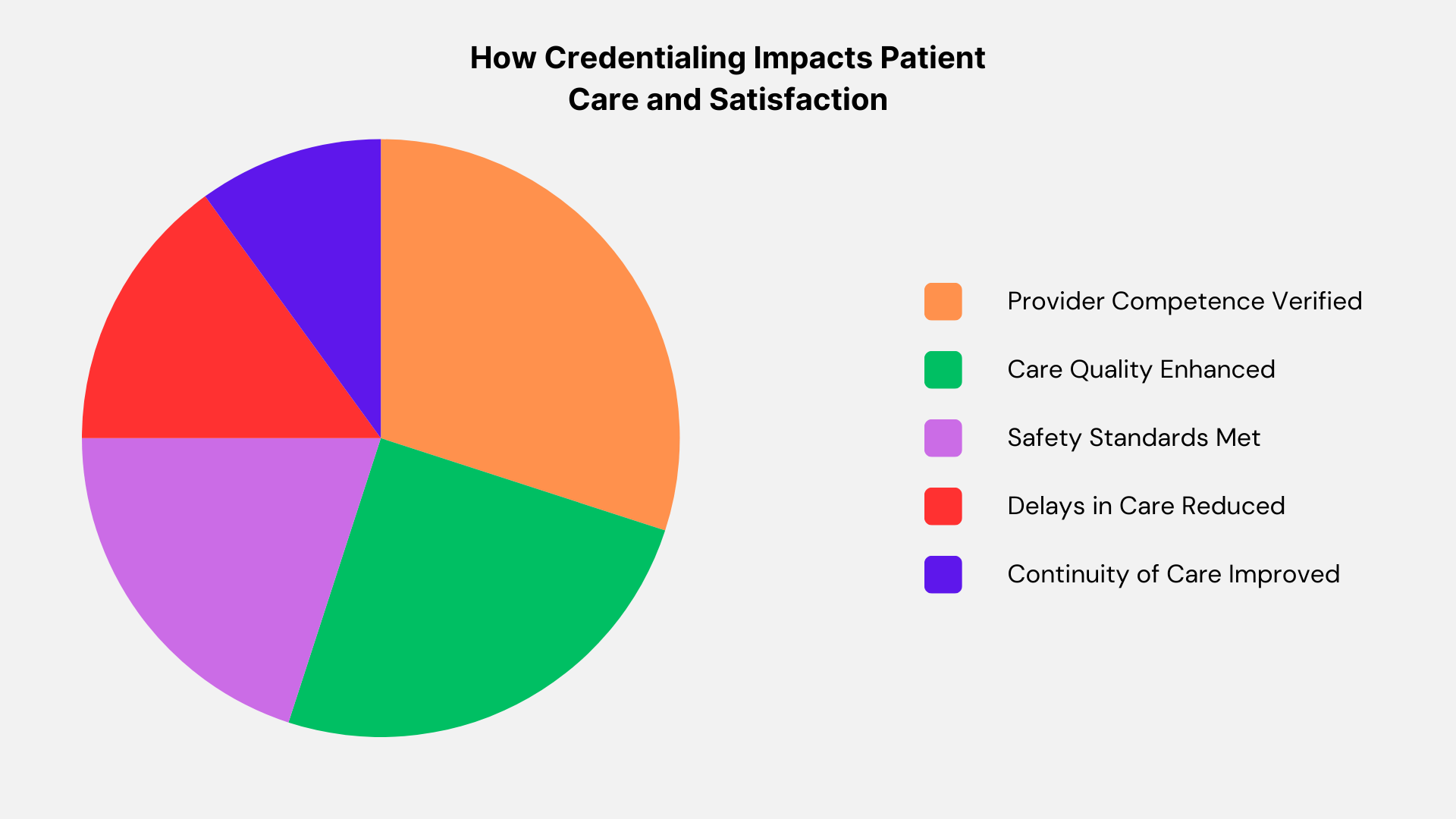
How Credentialing Influences Patient Care
- Ensures Provider Competency
Credentialing verifies that providers meet the qualifications and standards required to deliver safe, effective care. - Reduces Service Disruptions
Proper credentialing prevents interruptions caused by payer delisting or licensing lapses, ensuring continuous patient access to care. - Enhances Trust and Transparency
Patients feel more confident knowing their providers are accredited and meet strict compliance standards. - Improves Access to Specialized Equipment
Credentialed providers can offer a wider range of services and devices, meeting diverse patient needs. - Supports Timely Reimbursements
Efficient credentialing minimizes claim denials, reducing delays in equipment delivery or care services.
The Patient Perspective: Key Factors That Matter
- Seamless Service Delivery
- Expectation: Patients want their equipment and services delivered promptly, without administrative delays.
- Credentialing’s Role: Prevents billing interruptions and ensures providers can fulfill orders on time.
- Access to Qualified Providers
- Expectation: Patients value working with skilled, certified professionals.
- Credentialing’s Role: Confirms that providers have the necessary training, licenses, and certifications.
- Clear Communication
- Expectation: Patients appreciate transparency about processes and timelines.
- Credentialing’s Role: Supports smooth operations and better communication by preventing payer-related disputes or delays.
- Financial Clarity
- Expectation: Patients expect minimal out-of-pocket expenses and accurate billing.
- Credentialing’s Role: Ensures providers are in-network with payers, reducing financial surprises.
Strategies to Enhance Patient Satisfaction Through Credentialing
- Prioritize Timely Credentialing
- Why It Works:
Reduces wait times for equipment and services by ensuring all providers are active with payers. - How to Do It:
Use credentialing software to track deadlines and automate reminders for renewals.
- Why It Works:
- Ensure Provider Compliance
- Why It Works:
Maintains high standards of care and builds patient trust. - How to Do It:
Conduct regular audits to verify that providers meet all licensing and accreditation requirements.
- Why It Works:
- Streamline Communication with Payers
- Why It Works:
Resolves issues quickly, minimizing disruptions in patient care. - How to Do It:
Assign dedicated team members to handle payer interactions and expedite credentialing processes.
- Why It Works:
- Integrate Credentialing with Patient Services
- Why It Works:
Ensures that the credentialing process supports overall patient satisfaction goals. - How to Do It:
Coordinate credentialing efforts with billing, compliance, and patient service teams.
- Why It Works:
- Monitor and Respond to Patient Feedback
- Why It Works:
Identifies gaps in service delivery related to credentialing delays or errors. - How to Do It:
Use surveys and feedback tools to track patient satisfaction and address concerns promptly.
- Why It Works:
Track metrics like patient satisfaction scores and care delivery timelines alongside credentialing performance to evaluate the broader impact on patient care.
How WWS Can Help
At WWS, we help DME providers connect credentialing to improved patient care with:
- Streamlined Credentialing Solutions: Reduce delays and errors to ensure seamless service delivery.
- Compliance Expertise: Maintain high standards of provider qualifications and network participation.
- Integrated Workflow Support: Align credentialing processes with patient service goals to enhance satisfaction.
Schedule a consultation with WWS today to strengthen the link between credentialing and patient care:
Schedule a Meeting with WWS.
Conclusion
Credentialing plays a critical role in shaping patient experiences, from ensuring provider competency to minimizing service disruptions. By prioritizing accuracy, compliance, and timely processes, DME providers can enhance patient trust, satisfaction, and care outcomes.
Partner with WWS to optimize credentialing and elevate your patient care standards—schedule your consultation today!