


Introduction
Credentialing is a cornerstone of operational success for DME providers. Yet, without clear performance metrics, inefficiencies can go unnoticed, leading to delays, errors, and revenue loss. Tracking the right key performance indicators (KPIs) enables you to evaluate your credentialing process, identify bottlenecks, and drive improvements that boost efficiency and compliance.
In this blog, we’ll outline the most critical metrics to monitor for credentialing success and provide actionable tips for optimizing your workflows based on these insights.
Why Tracking Credentialing Metrics Matters
- Improves Workflow Efficiency:
Metrics pinpoint where processes are slowing down, enabling targeted improvements. - Enhances Compliance:
Tracking metrics ensures your team meets payer and regulatory requirements consistently. - Reduces Revenue Loss:
Monitoring approval timelines and claim denial rates prevents disruptions in reimbursements. - Drives Data-Backed Decisions:
KPIs provide concrete insights to guide resource allocation and strategic planning.
Top Credentialing Metrics to Monitor
- Average Time to Credential
- What It Measures:
The average duration from initial application submission to approval by payers. - Why It Matters:
Long credentialing timelines delay billing and impact cash flow. - How to Optimize:
Streamline workflows using credentialing software and identify payers with slower approval processes for direct follow-ups.
- What It Measures:
- Approval Rates on Initial Submission
- What It Measures:
The percentage of applications approved on the first attempt without revisions. - Why It Matters:
High initial approval rates indicate well-prepared applications and efficient workflows. - How to Optimize:
Implement pre-submission audits to ensure documentation accuracy and completeness.
- What It Measures:
- Claims Denial Rate Due to Credentialing Issues
- What It Measures:
The proportion of claims denied due to uncredentialed providers or other credentialing errors. - Why It Matters:
Denials disrupt cash flow and increase administrative costs. - How to Optimize:
Integrate credentialing systems with billing platforms to flag uncredentialed providers before claims submission.
- What It Measures:
- Re-Credentialing Compliance Rate
- What It Measures:
The percentage of providers re-credentialed on time before expiration deadlines. - Why It Matters:
Timely re-credentialing prevents delisting from payer networks and billing interruptions. - How to Optimize:
Use automated reminders and prioritize high-value payer renewals.
- What It Measures:
- Credentialing Cost per Provider
- What It Measures:
The total cost of credentialing activities divided by the number of providers credentialed. - Why It Matters:
High costs may indicate inefficiencies or over-reliance on manual processes. - How to Optimize:
Evaluate automation tools and outsourcing options to reduce expenses.
- What It Measures:
- Payer-Specific Turnaround Times
- What It Measures:
The average time each payer takes to process applications. - Why It Matters:
Understanding payer-specific trends helps prioritize follow-ups and manage expectations. - How to Optimize:
Maintain a database of payer timelines and focus on improving processes for slow responders.
- What It Measures:
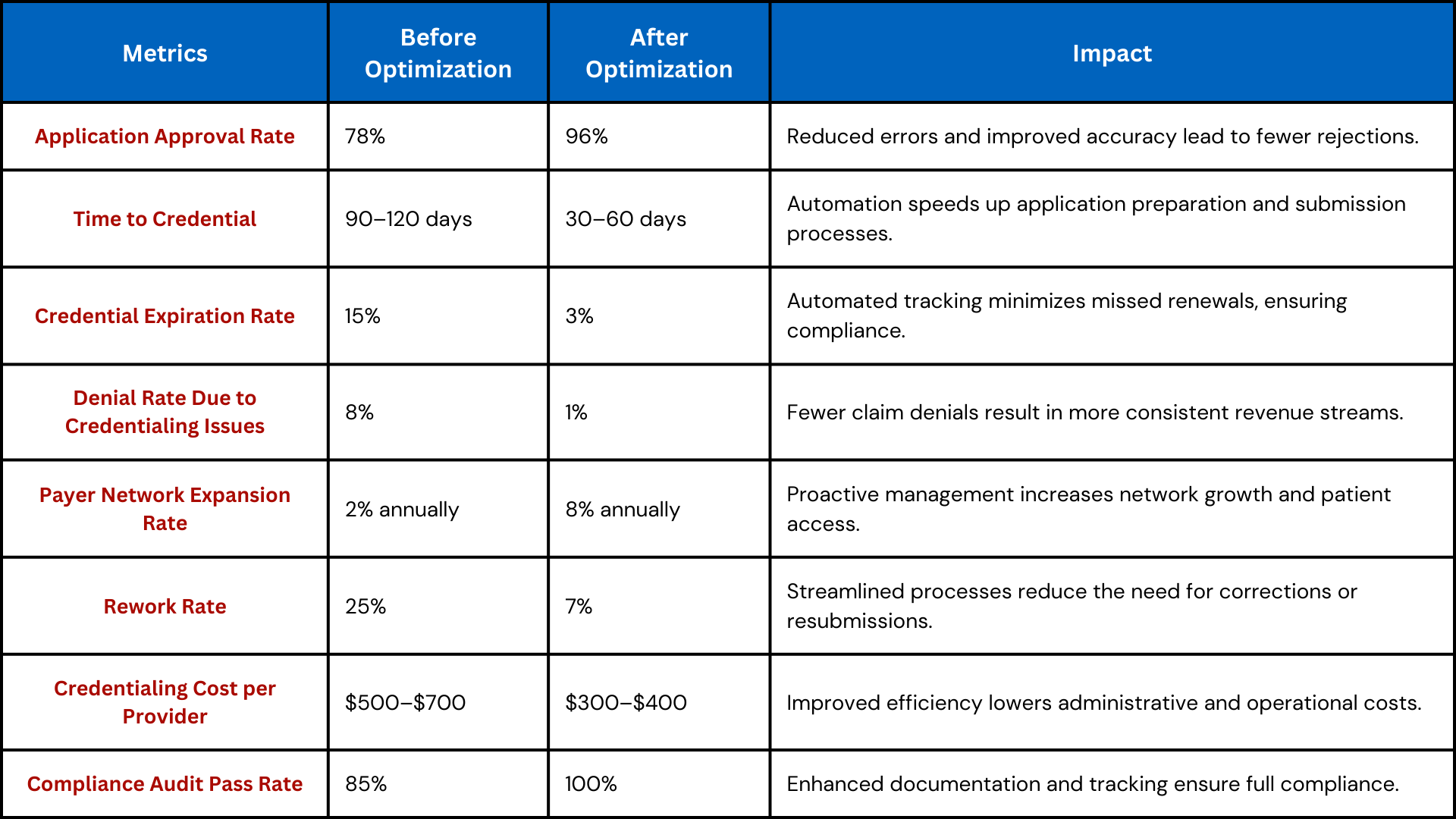
How to Use Metrics to Drive Improvements
- Create a Credentialing Dashboard
- Why It Works:
Centralizing metrics in a dashboard provides a real-time view of performance. - How to Do It:
Use credentialing software or data visualization tools to display KPIs for easy monitoring.
- Why It Works:
- Set Benchmark Goals
- Why It Works:
Clear benchmarks ensure your team has measurable targets to strive for. - How to Do It:
Establish goals for approval rates, turnaround times, and compliance metrics based on industry standards.
- Why It Works:
- Conduct Regular Performance Reviews
- Why It Works:
Frequent reviews identify trends and areas needing immediate attention. - How to Do It:
Schedule monthly or quarterly meetings to evaluate metrics and adjust strategies.
- Why It Works:
- Automate Reporting
- Why It Works:
Automation reduces the administrative burden of compiling reports and ensures consistent tracking. - How to Do It:
Leverage software to generate and distribute reports automatically at regular intervals.
- Why It Works:
- Train Your Team on Data Utilization
- Why It Works:
Empowering staff to understand and act on metrics drives collective accountability. - How to Do It:
Provide training on interpreting metrics and using data to inform day-to-day decisions.
- Why It Works:
How WWS Can Help
At WWS, we make it easy to track and act on credentialing metrics:
- Customized Dashboards: Our tools provide real-time visibility into your credentialing KPIs.
- Data-Driven Insights: We analyze your metrics to identify inefficiencies and recommend targeted improvements.
- Ongoing Support: From goal-setting to reporting automation, we help you build a performance-driven credentialing process.
Schedule a consultation with WWS today to elevate your credentialing efficiency:
Schedule a Meeting with WWS.
Conclusion
Tracking credentialing metrics is the key to identifying inefficiencies, improving workflows, and ensuring compliance. By focusing on the right KPIs and leveraging data-driven strategies, you can create a more efficient and effective credentialing process that supports long-term success.
Partner with WWS to unlock the power of credentialing metrics—schedule your consultation today!